
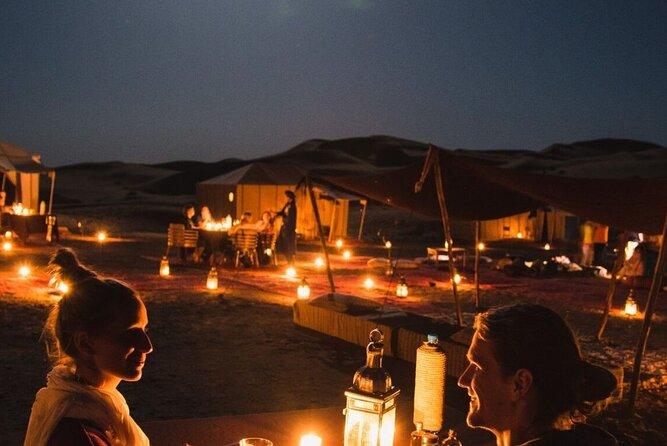
Few travellers know it when they land: Dakhla sits almost exactly on the Tropic of Cancer, which runs about thirty kilometres south of the town. Add a desert with no lighting a few minutes down the track, and you get a sky you cannot see from Europe, a few hours' flight away.
The Tropic of Cancer, 30 km from your hotel
The Tropic of Cancer is the northernmost line where the Sun can pass exactly overhead: about 23°26′ north. Dakhla lies at 23°41′, a quarter of a degree higher.
The line crosses the road south of the bay. On the way to the Imlili Sebkha you cross it and enter, geographically, the tropics.
The day shadows disappear
Around the summer solstice, on 21 June, the Sun passes within one degree of the vertical over Dakhla. At about 2 pm local time, an upright stick casts almost no shadow.
It also explains a well-known trap here: the air stays mild thanks to the wind and the ocean, but the Sun is very high for much of the year. The UV index often reaches 9 or 10: wear SPF 50 sunscreen even when it feels cool.
What you see from here, and not from Europe
At this latitude the southern sky opens up down to 66° south declination. Canopus, the second-brightest star in the sky and invisible from most of Europe, shines above the southern horizon on winter evenings.
In spring the Southern Cross skims the horizon in the evening, with the Omega Centauri cluster a little higher. In summer the centre of the Milky Way, between Scorpius and Sagittarius, climbs three times higher than in Paris.
Observing Capricornus from Dakhla
The name is confusing: Dakhla is close to the Tropic of Cancer, not the Tropic of Capricorn. But the constellation Capricornus is easy to observe from here, high in the southern sky in late summer and autumn.
With binoculars, look for the star Deneb Algedi, then the globular cluster M30 right beside it.
Where and when to observe
On the peninsula, the lights of the town and the hotels, and the sea haze, get in the way. You need to head into the desert: a few kilometres down the track there is no lighting at all.
Choose nights close to the new moon and bring a jacket: with the wind, nights are cool. An evening in the desert is enough for a first look.
Two nights under the stars
To watch the sky turn, you have to stay. The three-day, two-night safari sleeps in a Sahara camp far from any light: sunset, the full sky, then the Milky Way or the Moon rising, depending on the season.
Dakhla is also looking to space
On 29 April 2026, in Rabat, Morocco signed NASA's Artemis Accords, becoming the 64th signatory. In its wake, the Moroccan press and several experts revived an idea: building a rocket launch site in the south of the country, between Tan-Tan, Laayoune and Dakhla.
The arguments are geographical. The closer a site is to the equator, the more of a boost rockets get from the Earth's rotation: Dakhla is at 23.7° latitude, against 28.5° for Cape Canaveral. Add the Atlantic coast, vast sparsely populated areas and strong solar and wind potential.
For now it is a proposal: no official decision or timetable has been announced. An expert quoted by Finances News Hebdo puts a first phase at 500 to 800 million euros.
Tips for a night of observing
Bring binoculars, a sky-map app that works offline and a red-light torch, which does not dazzle. Give your eyes twenty minutes to adapt to the dark.
Tell us when you book that you are coming for the sky: we will choose the best date and spot with the guide.
The evening and the two nights in the desert can be booked online. Mention in your message that you are coming for the stars.
Choose my excursions